
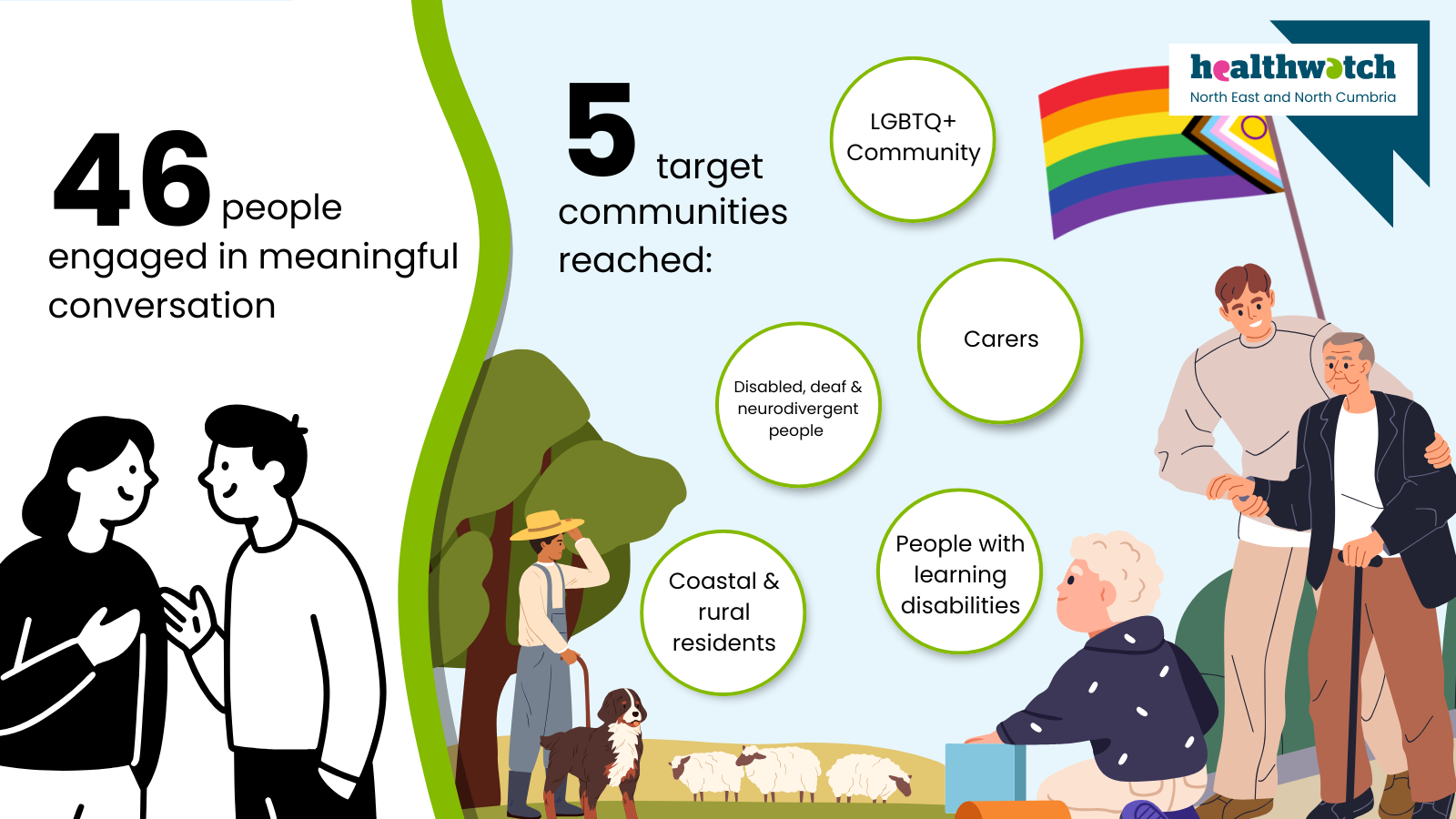
Over a five-week engagement project, Healthwatch Westmorland and Furness and Healthwatch Cumberland heard from rural and under-represented communities on one of life's most challenging topics: end of life and palliative care.
The partnership work was carried out as part of the North East and North Cumbria (NENC) Network of 14 local Healthwatch. Data and information gathered will inform NENC Integrated Care Board’s End of Life care strategy and needs assessment.
Inclusive conversations
We connected with communities often excluded from healthcare conversations: coastal and rural residents, the LGBTQ+ community, people with learning disabilities, and carers navigating complex issues of provision of end of life care. As subject-matter experts, we were asked to produce Easy Read materials for use by the network. As part of People First Independent Advocacy, which started out as a charity solely supporting people with disabilities, we understand how vital Easy Read is for any organisation that wants to meaningfully engage with those with learning disabilities.
This inclusive approach opened doors to conversations that revealed a startling knowledge gap about end of life planning within this community.
"The questions sparked conversation around where their personal finances will go, what a will is and how to create one, and ultimately a general understanding of what end of life care is," reported the Cumberland team after engaging with the Workington Self-Advocacy Group, where seven participants with learning disabilities shared their experiences.
Listening deeply
The depth of engagement revealed both human stories and systemic issues:
"It isn't a topic people usually find easy to talk about and then here I am expressing my wishes about my death with strangers,” said one gentleman in Penrith.
In Carlisle, six community members shared experiences of homophobia and prejudice affecting end of life care, including families not recognising same-sex spouses as next of kin and excluding them from care decisions. The lingering stigma from the AIDS epidemic continues to impact how gay men approach death and grief.
As one participant aged 23 reflected after completing the survey, the experience made her confront a topic she "had not really given adequate thought" to.
Meanwhile, rural residents highlighted stark inequalities and compared local provision unfavourably to urban areas.
Our engagement revealed gaps among people with learning disabilities about wills, finances, and end of life planning, as well as cultural and identity factors affecting end of life care preferences, from Irish wake traditions and concerns about discrimination.
Signposting support
Healthwatch engagement creates immediate value for communities, not just data for policymakers. Throughout the project, teams connected participants with vital services including Carer Support Eden, dementia support groups, Age UK, and Eden Valley Hospice.
A healthcare assistant on a maternity ward shared that despite dealing with death professionally, she "could not speak to anyone about her own thoughts" – until this project created a safe space for that conversation.
The project has ended but if you have an experience to share about end of life and palliative care please contact us at:
Healthwatch Cumberland
Email: [email protected]
Call: 0300 303 8567
Healthwatch Westmorland and Furness
Email: [email protected]
Call: 0300 373 2820