
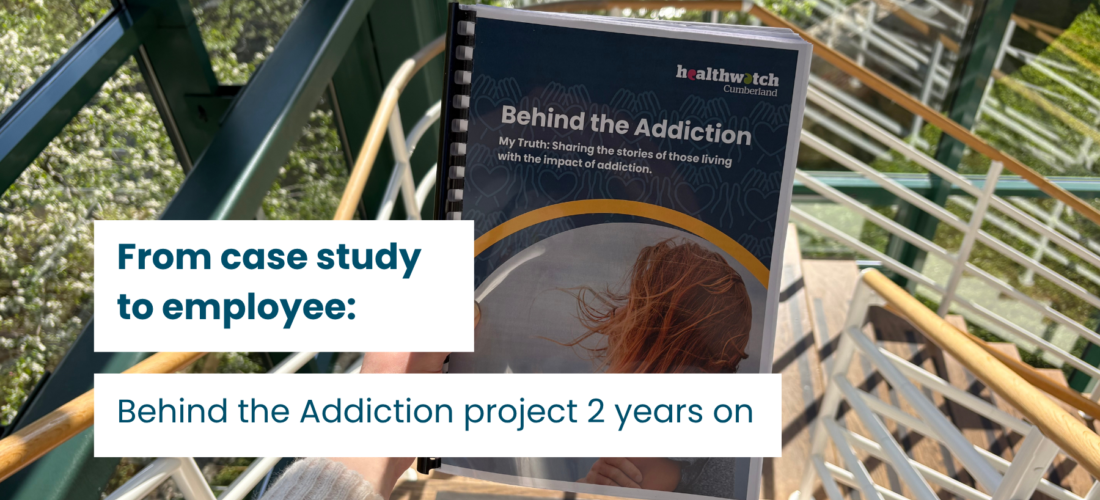
Two years ago, the Healthwatch Cumberland team conducted 29 case studies with people who wanted to share their experiences of living with addiction. This included those living in active addiction, those living in recovery and those who supported a loved one who was living with addiction.
We caught up with two project participants recently to find out how they are feeling now, and what their thoughts are on addiction support, particularly for women.
As part of People First’s 35 Years celebrations, we wanted to highlight a project participants’ amazing journey from case study to paid employment at People First.
Through volunteering, this participant grew in confidence and became a paid member of staff at People First. Working as a Job Coach in the People First Café, she supports young learning-disabled people to learn new skills and prepare for work in hospitality. This has allowed her to gain a sense of leadership and more stability.
“When I was involved in the project, I was still in rehab. Unemployed, essentially homeless and wasn’t in contact with my children. Since sharing my story, my life looks very different. I had never heard of Healthwatch or People First before and after hearing a bit more about the work that you do and what some of the opportunities are, I took the plunge and started volunteering at the Cancer Café to begin with. I had worked in a recovery role in the rehab I was in but working in the café was different. I believe that this volunteering role has led to paid employment, which meant that I am now able to live independently in my own house. This is massive as I was stuck in limbo waiting for suitable accommodation following rehab.”
“Working has given me an all-important routine and has been good for learning financial independence. Before my drinking got out of control, I had to leave work during the pandemic and become a stay-at-home-mum, and I honestly felt like I’d lost my purpose. This made me drink more. There are so much more expectations and pressure for women to take charge of childcare. Combined with this and feeling lost, it was socially acceptable to drink more at that time, and my addiction became my life.”
“When I was living in addiction, I didn’t even know what season it was. Now I wake up with gratitude every morning, especially for the little things like hearing the birds. I have my sobriety, a job I love, a home that is my own and a relationship with my kids again.”
“My kids have the best version of me now - we are so much closer. I am taking my daughter to her first ever concert soon! I still question myself most days and wonder if I’m a bit selfish for putting my recovery first, but it has to be the most important thing. Some days when I am struggling and I feel like I can’t do it for myself, I do it for my kids.”
“Recovery is available to everyone but never in isolation. I think you can only keep what you have if you also give it away.”
The main aim of Healthwatch Cumberland’s Behind the Addiction project was to reduce the stigma that follows addiction and encourage people to see the person behind the addiction. By believing in the individual, People First can transform lives and create a stronger community.