Skip To Content

What is Neighbourhood Health — and what will it actually change for patients?

Health and care services in England are undergoing one of the most significant redesigns in decades. A central part of this change is the introduction of “Neighbourhood Health," a model designed to bring more services closer to where people live and make it easier to access joined-up care.

But what does it actually mean in practice and what might it change for patients?
A shift from hospital to community care

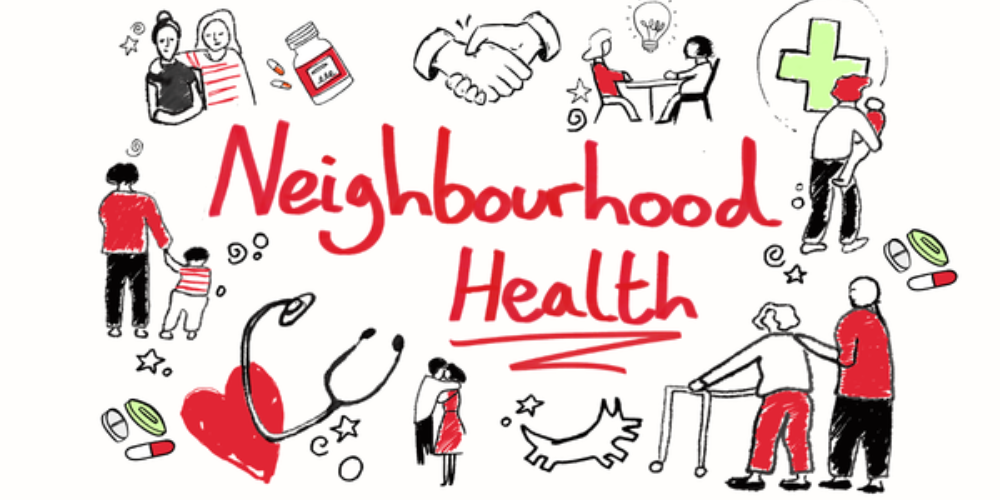
At its core, Neighbourhood Health is about shifting care away from hospitals and into local communities.

Rather than patients moving between multiple separate services (for example GP surgeries, hospitals, community teams and social care) the aim is to bring these services together so people can access more support in one place, or through coordinated teams working around them.

This approach is part of a wider national ambition to focus more on prevention, early intervention and supporting people to stay well at home for longer.

What a “neighbourhood” means

In most areas, a neighbourhood is expected to cover a population of around 30,000 to 50,000 people, although this is not fixed nationally.

Importantly, these boundaries are not always based on existing council or NHS structures. Instead, they are intended to reflect how people actually live, use services and identify with their local area.

Local Health and Wellbeing Boards, Integrated Care Boards (ICBs) and councils are being asked to agree what these neighbourhood footprints should look like in each area.

What services might be included

Neighbourhood Health is designed to bring together a wider range of services than traditional GP or community care alone.

Depending on the local area, neighbourhood services may include:

  • GP practices and primary care services
  • Community nursing and therapists
  • Pharmacists
  • Mental health support
  • Social care services
  • Rehabilitation services
  • Some hospital outpatient services delivered locally
  • Voluntary, community, faith and social enterprise (VCFSE) services
  • Wider support such as debt advice, employment support and housing services

The intention is to take a more “whole person” approach, recognising that health is often affected by factors such as housing, income, loneliness and employment.

What will actually change for patients?

For most people, the aim is that care becomes:

1. Closer to home

More services should be available locally, reducing the need to travel to hospital for routine or follow-up care.

2. More joined-up

Instead of repeating information to different services, care teams are expected to work more closely together and share information more effectively.

3. Easier to navigate

The system is intended to feel less fragmented, with fewer referrals between different parts of the NHS and social care.

4. Focus on prevention

There is a stronger emphasis on identifying needs earlier and supporting people before conditions become more serious.

5. More personalised

Care should take into account a person’s wider circumstances, not just their medical condition.

Neighbourhood Health Centres

Alongside this model, new Neighbourhood Health Centres are being developed in some areas, particularly in communities with higher levels of deprivation.

These centres are intended to act as “one-stop shops” where people can access multiple services under one roof. Depending on the site, this may include urgent care, GP services, diagnostics, mental health support and community services.

Over time, some centres may also include non-medical support such as employment advice or social support services.

However, not all neighbourhood services will be delivered in new buildings. In many cases, existing GP surgeries, community buildings, and other local facilities will continue to be used in new ways.

What is still not clear?

While the direction of travel is set, many details are still being developed locally. These include:

  • Exactly how services will be coordinated in each area
  • How funding will be shared between organisations
  • How data will be shared safely between services
  • What staffing models will look like in practice
  • How consistent the offer will be between different neighbourhoods

This means the experience of Neighbourhood Health may look different depending on where you live.

What Healthwatch will be looking at

As these changes develop, Healthwatch will play a key role in gathering people’s experiences and feeding them back into local and national decision-making.

Key questions include:

  • Is care actually easier to access?
  • Do services feel more joined-up for patients?
  • Are people being involved in shaping local services?
  • Are inequalities being reduced or widened?
  • Does the system feel clearer — or more complex?

Neighbourhood Health is still in development and many of the changes will be introduced gradually over the coming years.

For patients, the promise is a more local, connected and preventative approach to care. But whether this is realised will depend on how effectively services work together and how well the system listens to people’s experiences as it changes.

What's your experience with Neighbourhood Health?

Health and care services are changing, with more support expected to be delivered closer to home and within local communities. But for these changes to work, people’s real experiences need to be heard.

Have you:
• struggled to access care locally?
• experienced joined-up support that worked well?
• noticed changes to GP, hospital or community services?
• used local wellbeing or support services in your area?

We’d love to hear from you.

Your feedback helps shape local health and care services and ensures patient voices stay at the centre of decision-making.