
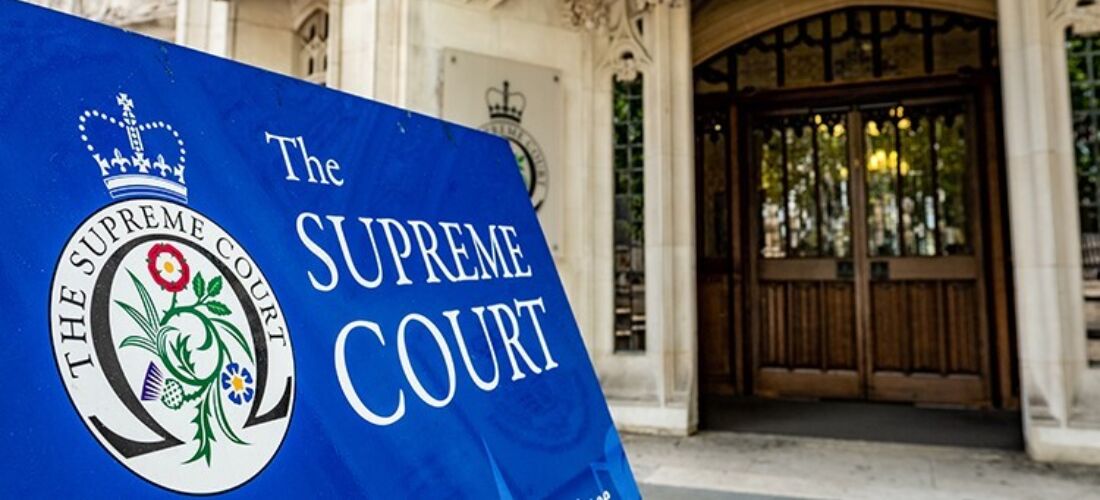
Our response to the Supreme Court’s recent decision
Today, we stand alongside people, families and partners across the country who are deeply concerned by the Supreme Court’s decision to weaken the safeguards that protect some of the most vulnerable in our communities.
For many people, Deprivation of Liberty Safeguards (DoLS) is not an abstract legal term, they are one of the few ways we make sure restrictions on people’s lives are seen, questioned, and, where needed, challenged.
What is the ruling
This week the UK Supreme Court has ruled that ‘disabled people aged 16 and over will now be able to give consent to their care arrangements’ despite not having the capacity to do so.
The legal safeguards previously in place, designed to ensure an independent person checks that such arrangements are justified, lawful, and in the person's best interests, will no longer be in effect.
This is a profound shift that could lead to complication and confusion.
What the ruling could mean
- Rights could quietly slip away
People may lose the independent checks, scrutiny, and legal routes that help keep them safe.
- Some lives may be valued less
The judgment suggests that people with profound disabilities may not be “deprived of liberty” if they cannot experience it in the same way.
We believe every person’s freedom matters - equally, always.
- Fewer situations may be recognised as restrictive
Only the most extreme, prison-like conditions may be seen as a deprivation of liberty -leaving many highly restrictive care settings outside protection.
- Silence could be mistaken for consent
If someone does not object, this could be seen as agreement, even where there is no capacity, lifelong restriction, or the use of restraint or sedation.
Passivity is not consent.
Who may be most affected
Older people, including those living with dementia
Without oversight, restrictive care can happen quietly, leaving people unseen in systems meant to protect them.
People with learning disabilities and autistic people
People may live with locked doors, blanket restrictions, or medication used to control behaviour — without this being recognised as a loss of liberty.
Why this matters
A good society looks after those who are most vulnerable. This decision will impact the rights, and freedoms of people across the UK who rely on fairness and decency.
This is about more than legal definitions. It is about dignity, equality, and whether we truly stand by the principle that every person’s rights matter.
We know what happens when safeguards are weakened: oversight fades, risks grow, and closed cultures can develop out of sight and unseen.
What needs to happen now
We share the position of other right-based organisations and urgently call on decision makers to:
- Issue clear national guidance to prevent confusion and inconsistent practice
- Introduce urgent legislation to restore and strengthen protections
We cannot accept a system where people’s rights are quietly reduced behind closed doors.
“Passive consent” is not real consent
The idea that someone cannot be deprived of liberty because they cannot fully experience it is deeply concerning.
At People First, we are clear:
- Compliance is not freedom
- Silence is not agreement
- Every person deserves protection, voice, and dignity
Removing safeguards risks leaving harm unseen.
We will not stay silent
We are joining others in calling on the UK Government to act now.
People need clarity, protection, and their rights upheld - not weakened.
We will continue to stand with you, speak up, and fight for your rights.
If you need support
- People First Helpline: 03003 038037 Call our helpline for information, guidance and support.
9am – 5pm Monday to Friday. Or email [email protected]
- Mind Infoline: Call 0300 123 3393 (9am to 6pm, Monday to Friday) or email [email protected] for confidential mental health information.
- National Autistic Society: Visit https://www.autism.org.uk/advice-and-guidance for specialist information and advice on rights and social care options.
- Mencap helpline: The Learning Disability Helpline is a free advice service for people with a learning disability and their families and carers. Email: [email protected]